Research briefing · KLOW-157
Four peptides. One vial. One pathway map.
How the KLOW-157 four-in-one blend works: GHK-Cu copper delivery, collagen and elastin signalling, BPC-157 and TB-500 repair pathways, and KPV inflammatory modulation.
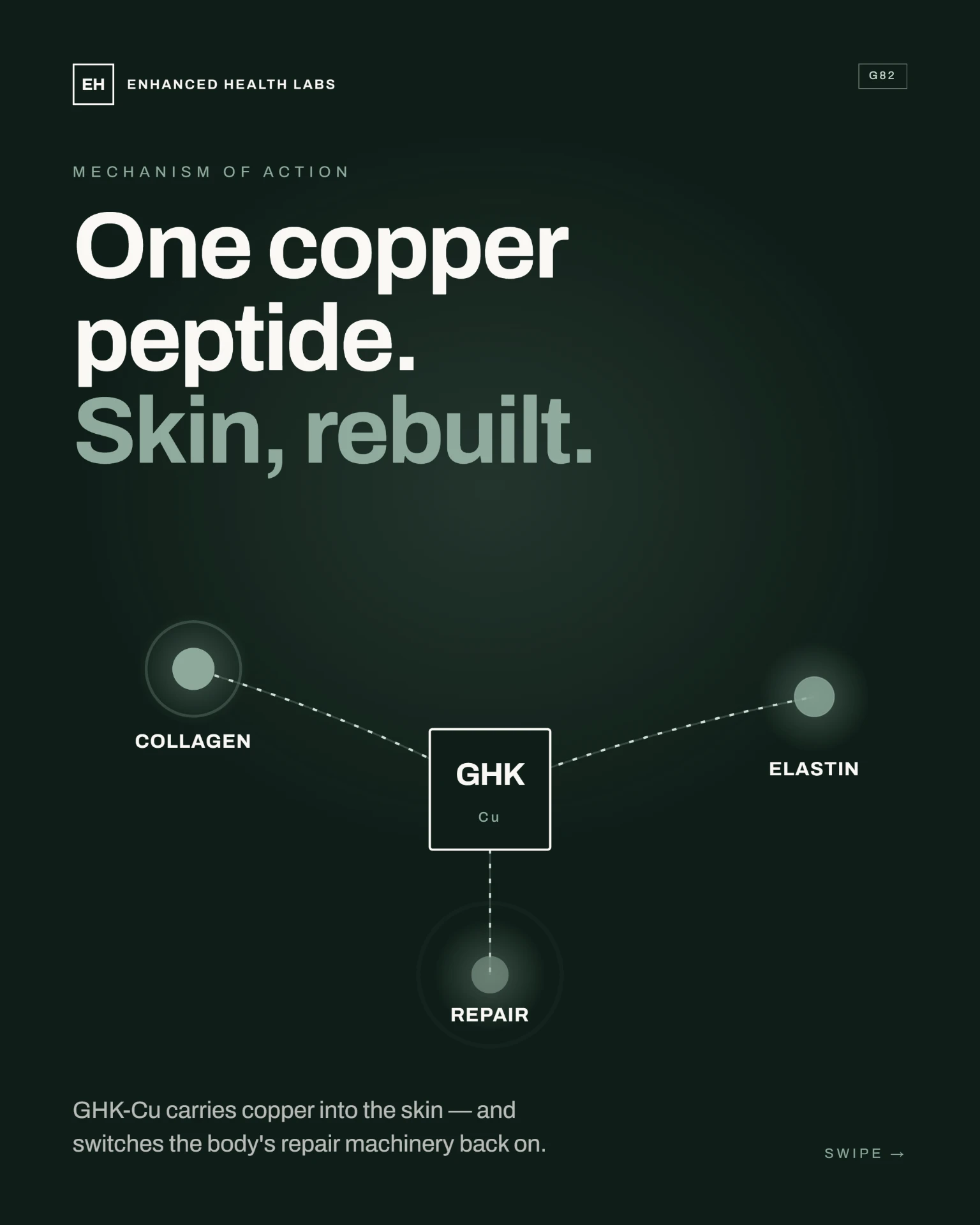
Fig. 01 · GHK-Cu signalling into collagen, elastin and repair
Composition
What each peptide does.
GHK-Cu · 50mg
A copper-binding tripeptide. Studied as a carrier that delivers copper into tissue, where it is associated with collagen type I and elastin synthesis, glycosaminoglycan production and dermal matrix remodelling.
BPC-157 · 10mg
A pentadecapeptide investigated for angiogenic signalling and fibroblast migration — the endpoints most often measured in tissue repair and wound-model research.
TB-500 · 10mg
The active fragment of thymosin beta-4. Studied for actin regulation and cell migration, frequently paired with BPC-157 in remodelling and recovery research.
KPV · 10mg
A tripeptide fragment of alpha-MSH studied for downregulation of inflammatory signalling, which makes it a common control arm alongside repair-focused peptides.
Measured endpoints.
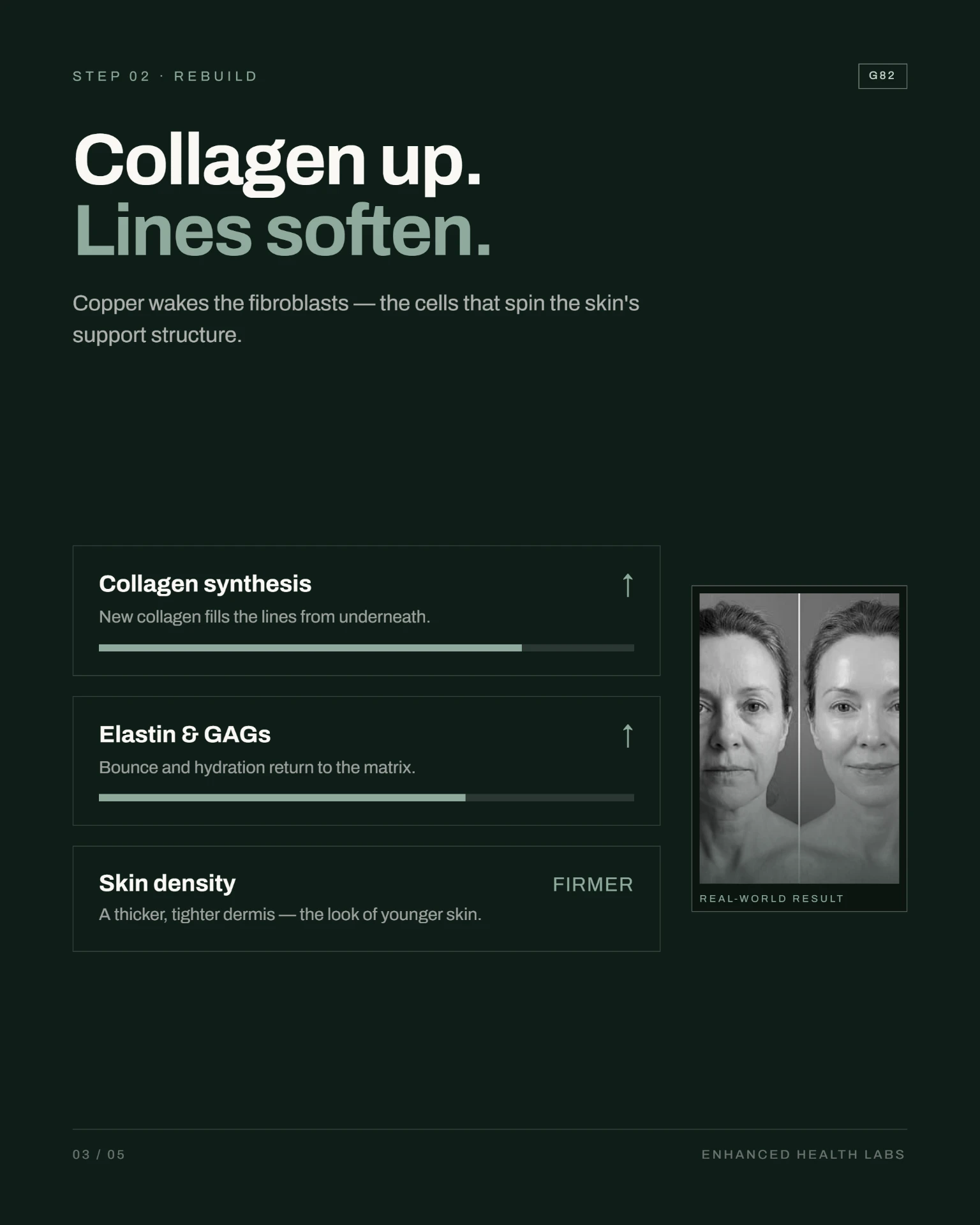
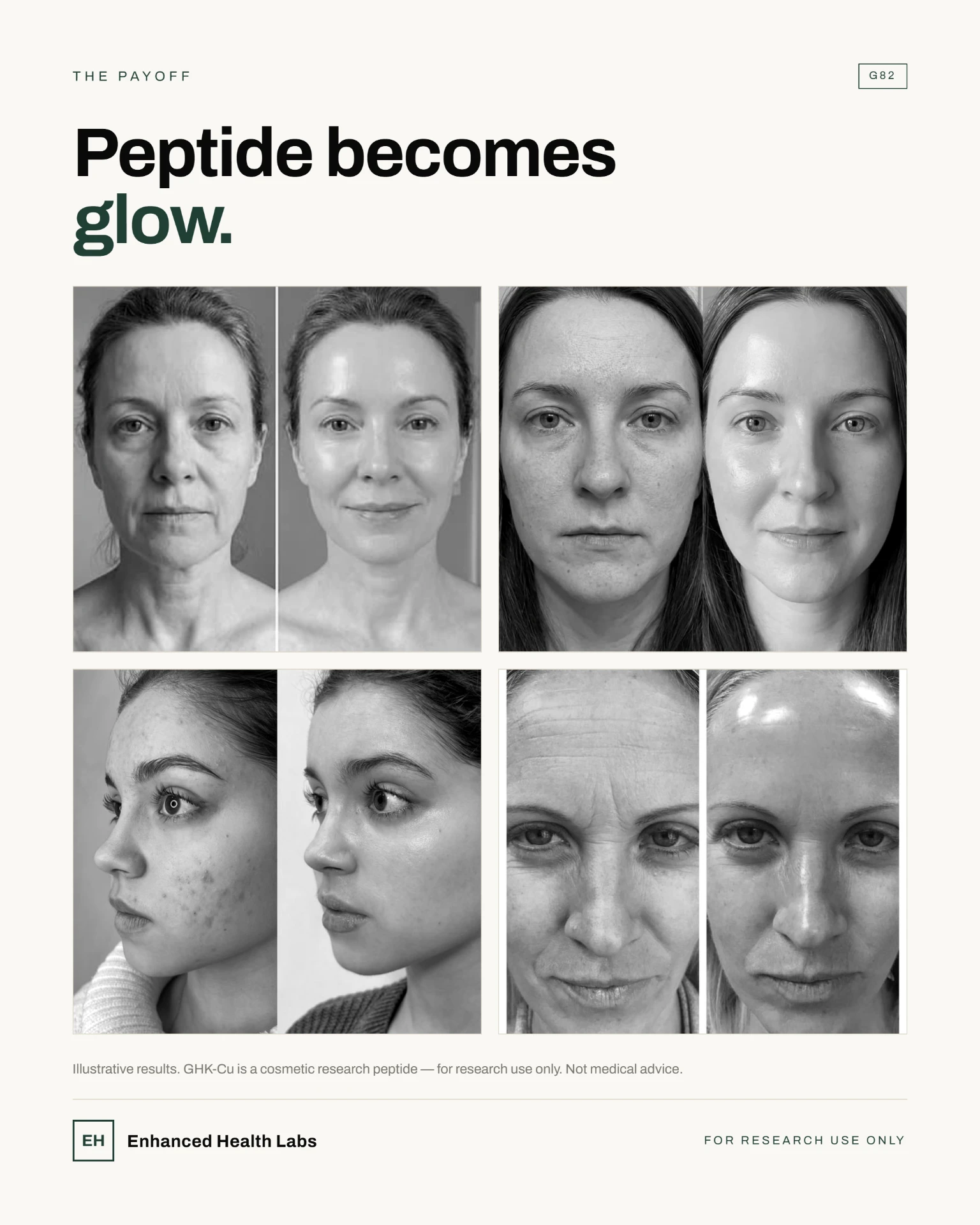
Illustrative of published copper-peptide literature. Not a claim about outcomes from EnhancedHealthLabs material. Research use only.
KLOW-157 · 80mg